

Finding the right SEO strategies for out-of-state landlords is one of the most reliable ways to build a steady pipeline of seller leads in 2026.
Absentee owners rarely see their properties in person, which means they lean on search engines the moment they decide to sell, hire a manager, or offload a property they no longer want to deal with. If your business shows up when they search, you get the call before your competitors do.
Out-of-state landlords are a different audience than local sellers. They are not driving past your yard signs. They are not hearing about you from a neighbor.
Almost every touchpoint they have with your business starts with a Google search, often from hundreds or thousands of miles away. That makes search visibility the single biggest lever you have with this group.
Why Out-of-State Landlords Search Differently
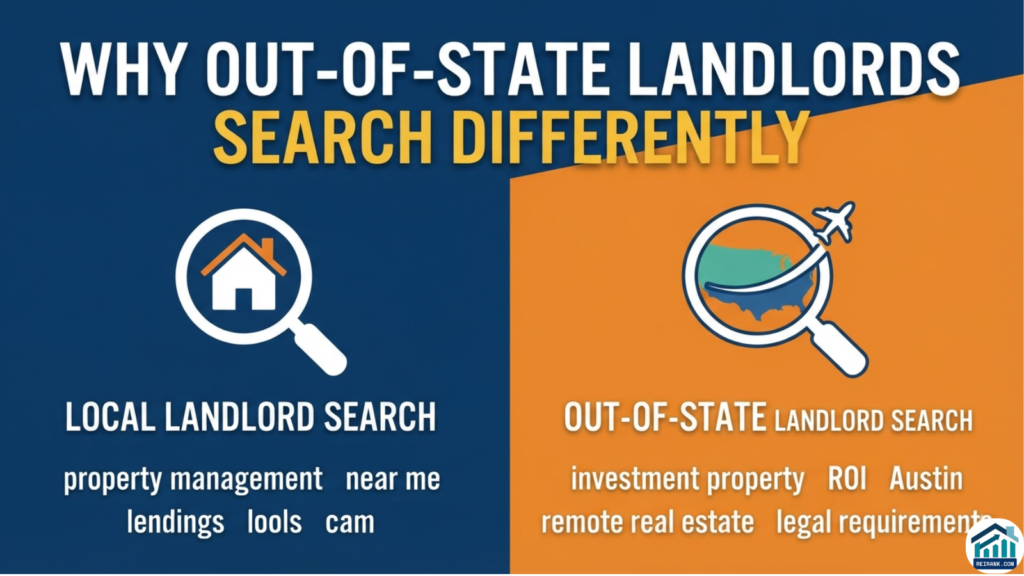
Local sellers often already have a rough idea of who buys houses in their area. Out-of-state landlords usually do not. They are searching cold, which means their queries tend to be broader and more informational at first.
Common early-stage searches include phrases like:
- Sell a rental property in another state — This is usually the first search a landlord runs once they start considering an exit. They are exploring whether selling remotely is even realistic, not looking for a specific buyer yet.
- Manage a rental property from out of state — This search often comes from landlords who are not ready to sell yet. They are weighing whether to keep the property and hire help or sell instead. Content aimed at this search can gently introduce selling as an easier alternative.
- Who buys rental properties with tenants — This tells you the landlord has a tenant in place and sees that as a complication. They are trying to determine whether a sale is even possible without evicting anyone first.
- Out-of-state landlord problems — A broad, frustration-driven search. These landlords may not be thinking about selling yet, but they are dealing with headaches that selling could solve, making this valuable early content to capture.
Later in their decision process, the searches get more specific and closer to buying intent:
- Sell my rental property fast [city] — This is a high-intent search. The landlord has decided to sell and is now looking for a buyer in the specific city where the property is located.
- Cash buyer for a tenant-occupied property — This landlord has already ruled out a traditional listing. He is specifically looking for a buyer who will take the property with tenants still in place, which narrows the field considerably.
- Sell inherited rental property out of state — Common among landlords who did not choose this situation, often after inheriting a rental from a family member. These searchers tend to want a straightforward, low-effort sale rather than becoming a long-term landlord themselves.
A strong content strategy needs to cover both stages. If you only target bottom-funnel keywords, you miss the much larger group of landlords who are still deciding what to do. If you only target broad, informational keywords, you attract traffic that never converts.
Building Out-of-State Landlord Leads Through Content

Generating consistent out-of-state landlord leads starts with content built specifically around their situation, not a generic seller page.
A few content formats work particularly well for this audience:
Situation-based landing pages. Create dedicated pages for scenarios like tired landlord, inherited rental property, tenant-occupied home for sale, and problem tenant situations. Each page should speak directly to that specific pain point instead of using one generic message for every visitor.
State and city-specific pages. An out-of-state landlord searching for help typically includes the property location in their search, not their own location. Build pages around the city or region where the property sits, not where the owner lives.
Educational blog content. Posts that answer real questions, such as how to sell a rental property with tenants still in place or what happens to a lease when a rental property is sold, build trust with an audience that is often anxious about the process. This content also captures the earlier, broader searches mentioned above.
FAQ sections with schema markup. Out-of-state landlords often have very specific legal and logistical questions. Answering these directly and marking them up with FAQ schema increases your chances of appearing in expanded search results.
Local SEO for Real Estate Investors Still Matters
It might seem counterintuitive, but local SEO for real estate investors is just as important when targeting an audience that lives elsewhere. The property is local, even if the owner is not.
Search engines weigh local signals heavily for property-related searches, so the following still apply:
- A fully optimized Google Business Profile for every market you serve — This is often the first thing a searcher sees, even before your website. A complete profile with accurate categories, service areas, and photos gives you a real shot at appearing in local map results for each market.
- Consistent business name, address, and phone number across directories — Search engines cross-check this information across the web. When it does not match from one directory to another, it creates doubt about which listing is accurate, which can quietly hold back your local rankings.
- Location-specific service pages, not just a single national page — A single page trying to rank for every city you buy in rarely ranks well anywhere. Dedicated pages for each market give search engines a clear, focused page to match against local searches.
- Reviews from sellers in each market, not just a handful of generic testimonials — Reviews tied to specific cities do double duty. They build trust with new sellers researching your business, and they reinforce to search engines that you have a real, active presence in that market.
Investors who skip local SEO because their target audience is not local are leaving visibility on the table. The searches are tied to the property location, and that is where local SEO earns its value.
Technical Foundations That Support Everything Else
None of the content strategies above will perform well if the technical foundation is weak. Before investing heavily in content, confirm the following are in place:
- A fast, mobile-friendly website, since a large share of out-of-state landlords will find you on a phone — Many of these searches happen on the go, often between other tasks. A slow-loading page or one that is hard to navigate on a small screen will lose visitors before they ever read your content.
- Clean site architecture that connects blog content to relevant city and situation pages — When blog posts link naturally to the right landing pages, visitors move from research to action without hunting for it themselves, and search engines get a clearer picture of how your pages relate to each other.
- Working conversion tracking, so you actually know which keywords and pages bring in real leads — Without this, you are guessing at what is working. Proper tracking shows you which content and campaigns are actually producing form fills and calls, not just traffic.
- Accurate, indexed sitemaps, so new content gets discovered quickly — A sitemap that is not being read correctly by search engines can leave new pages sitting unindexed for weeks. Getting this right means new content starts earning visibility much sooner.
A well-built page with no technical foundation underneath it will struggle to rank, no matter how good the writing is.
Turning Search Traffic Into Real Conversations
Ranking is only half the job. Once an out-of-state landlord lands on your site, the page needs to move them toward an actual conversation.
A few things consistently improve conversion for this audience:
- A form that asks about the property, not just contact details, so your team can follow up with something specific rather than a generic script — Basic contact forms leave your team guessing on the first call. Asking a few property-specific questions upfront lets you feel informed rather than like a cold outreach.
- Clear next steps are stated on the page, so the landlord knows exactly what happens after they submit a form or make a call — Uncertainty causes hesitation. When a landlord knows they will get a call within the hour, or an offer within a day, they are far more likely to actually submit the form.
- Trust signals placed near the point of action, including reviews, years in business, and markets served — An out-of-state landlord cannot visit your office or meet you in person, so these signals often do the work that a face-to-face conversation would normally do in building confidence right before they take action.
- Fast follow-up, since a landlord who submits a form at night and does not hear back until the next day may have already contacted another buyer — Speed matters more than almost anything else at this stage. A motivated landlord filling out multiple forms will often go with whoever calls back first, regardless of who had the better website.
How REIRank Can Help
Building out this kind of SEO strategy takes real time. It means researching keywords specific to absentee owners, writing content for each stage of their decision process, optimizing local listings across every market you serve, and setting up tracking so you know what is actually working.
Most investors do not have the hours in a week to do all of that consistently while also running acquisitions.
This is exactly where REIRank comes in. We build local SEO campaigns and content strategies specifically for real estate investors who want to reach absentee owners and out-of-state landlords without having to become an SEO team themselves.
From city-specific landing pages to Google Business Profile optimization to full-funnel content that speaks to a landlord’s actual situation, our team handles the strategy, so your team can focus on following up with the leads it produces.
If chasing out-of-state landlord leads has felt inconsistent or entirely dependent on outbound effort, a properly built SEO system can change that.
Visit our services page to see how REIRank builds SEO, PPC, and content strategies for real estate investors, and book a free consultation to talk through what this could look like in your specific markets.
Conclusion: SEO Strategies for Out-of-State Landlords
Out-of-state landlords are one of the most underused lead sources in real estate investing, largely because most investors are not set up to reach them where they actually search.
A clear content strategy built around their real questions, strong local SEO for every market you serve, a solid technical foundation, and a fast, specific follow-up process can turn this audience into one of your most consistent lead sources heading into 2026.