

Let’s be honest for a second. If you are still running your real estate investing business the same way you were three years ago, sending out the same mailers, relying on the same referral network, and hoping the phone rings, you are fighting a much harder battle than you need to.
The market has shifted. Sellers research online before they call anyone. Buyers compare multiple investors in a single afternoon. And the investors quietly winning the most deals right now are the ones who figured out that digital marketing is no longer optional. It is the game.
The good news is that you do not have to become a marketing expert overnight. You just need to understand where things are headed so you can start making smarter decisions about how your time and money are spent.
That is exactly what this guide is about. These are the digital marketing trends for real estate investors that are genuinely moving the needle in 2026, broken down in a way that is practical, clear, and actually useful, whether you are just getting started or you have been in the business for years.
Your Website Is Still the Foundation, But It Has to Earn Its Keep
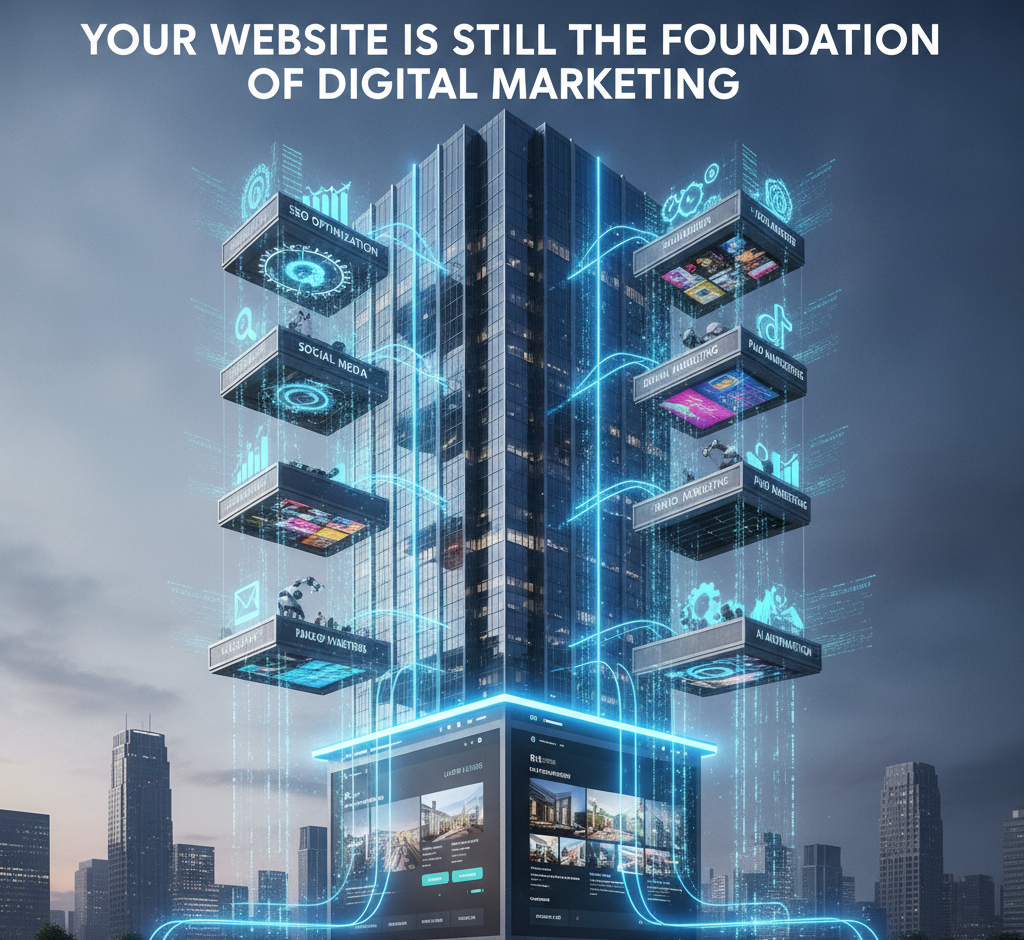
Every conversation about real estate digital marketing starts and ends with your website. Not your Facebook page, not your Instagram profile, not a third-party listing platform.
Your website. It is the one piece of digital real estate you actually own, and it is where every other marketing effort should ultimately send people.
Here is what most investors miss, though. Having a website is not enough. Your website has to work for you, meaning it has to load fast, look professional on a phone, and make it incredibly easy for a motivated seller to take action the moment they land on it.
If someone searching for a way to sell their house fast clicks onto your site and it takes four seconds to load, they are already gone. If they cannot find your phone number within the first few seconds of scrolling, they will click back and call your competitor instead.
In 2026, the best investor websites are less like digital brochures and more like lead conversion machines.
They speak directly to the seller’s situation, answer the most common questions before those questions are even asked, and guide visitors toward a single, clear action, usually filling out a form or picking up the phone.
Everything else in this guide builds on that foundation, so if your website is not in good shape, that is where to start.
SEO Is the Long Game That Pays Off for Years
Search engine optimization, or SEO, is one of those things that investors tend to either obsess over or ignore entirely. Those who ignore it are missing out on one of the highest-quality, lowest-cost lead sources in real estate digital marketing today.
Here is the simple reason why SEO matters so much. When someone types “sell my house fast in [your city]” into Google at midnight because they are stressed about their mortgage, they are already looking for you.
They have a problem, they know they need help, and they are actively seeking a solution right now.
That is about as warm as a lead can get without being a friend referral. SEO is how you make sure your website shows up when those searches happen, day after day, without paying for every single click.
The shift in 2026 is that effective SEO for investors is becoming more local and more specific than it used to be.
With 93% of homebuyers and sellers using local search to find professionals, optimizing your website for the exact neighborhoods, cities, and zip codes you serve is more important than general keyword stuffing.
Investors who create dedicated pages for each area they work in, with genuinely useful content tailored to local sellers, consistently outrank competitors with a single generic homepage.
ALSO READ: 15 Best On-Page SEO Tips for Real Estate Investors’ Websites
It takes time to build, but once it works, organic search traffic keeps flowing long after the work is done.
AI Tools Are Making Good Marketing Faster and Cheaper

If you have not yet started experimenting with AI in your marketing, 2026 is the year to start. Not because it is trendy, but because the practical applications are real and the time savings are significant.
Real estate marketing trends this year are heavily shaped by the extent to which AI has changed what is possible for small-investor operations with limited budgets and lean teams.
Think about what takes you the most time in your marketing. Writing property descriptions, drafting follow-up emails, creating content for your website, and responding to inquiries.
AI writing tools can now handle first drafts of all of that in seconds, leaving you to review, personalize, and send rather than starting from scratch every time. That alone can save hours every single week.
For investors who deal with properties that need to be marketed after acquisition, AI-powered virtual staging tools are one of the biggest practical shifts in real estate digital marketing right now.
Physical staging can cost thousands of dollars and take days to coordinate. AI staging tools can transform empty rooms into beautifully furnished spaces in minutes, at a fraction of the cost, with no scheduling headaches.
Over 80% of buyers identify photos as the most important factor in evaluating a property, so the quality of your visual marketing directly affects how quickly and profitably you can move deals.
Beyond writing and visuals, AI is also changing how investors handle lead follow-up through smart CRM systems that can automate personalized messages based on where a prospect is in their decision-making process.
Predictive tools analyze browsing behavior, page engagement, and listing views to help you send the right message at the right time, making your follow-up more effective without requiring you to manually track every interaction.
Short-Form Video Has Become Non-Negotiable
Here is something that would have sounded unusual a few years ago: video is now the primary content format for real estate marketing, with more than three-quarters of real estate professionals using it as their main marketing tool.
That number has only grown as platforms like Instagram Reels, TikTok, YouTube Shorts, and Facebook Reels have become central to how people discover businesses and make decisions.
For real estate investors, short-form video is one of the most powerful trust-building tools available, and building trust is literally the entire challenge when you are asking a homeowner to accept a cash offer on one of their most valuable assets.
A homeowner who has watched five or six of your short videos over the past few weeks already feels like they know who you are, how you operate, and whether you seem trustworthy. By the time they pick up the phone to call you, a lot of the initial hesitation is already gone.
The keyword here is short. Real estate marketing trends show that videos in the 30 to 60-second range get roughly 27% higher engagement than longer content, which makes sense when you think about how people actually scroll through social media.
You have a few seconds to grab someone’s attention, deliver something genuinely useful or interesting, and leave them wanting to know more.
That is the skill to develop with short-form video, and it is more accessible than most investors think. You do not need a production crew or expensive equipment. A phone, decent lighting, and something genuine to say are often enough to get started.
What works well for investors specifically includes quick educational videos that explain the cash-buying process, honest behind-the-scenes footage of what happens after you acquire a property, short Q&A videos that address the most common seller concerns, and neighborhood market updates that position you as a local expert worth paying attention to.
Paid Social Ads Are Getting Smarter and More Targeted
Organic reach on social media has been declining for years, and 2026 is no different. If you want your content to consistently reach the homeowners and sellers in your target market, you need to invest some of your marketing budget in paid social media advertising.
The real estate marketing trends this year show paid social media ads at a 42% adoption rate among real estate professionals, underscoring how essential they have become for sustained visibility.
What has changed significantly is the sophistication of the targeting available. Gone are the days of running a broad ad that reaches a general audience in your metro area and hoping someone relevant sees it.
Today’s paid social ads can be targeted by specific zip codes and neighborhoods, homeowner status, income tier, age range, and even behavioral signals suggesting someone may be in a life transition that often leads to needing to sell a property.
That level of specificity means less budget wasted on people who will never be your customer and more of your spend reaching the exact people you want to connect with.
For investors just starting to experiment with paid social ads, Facebook and Instagram remain the most practical starting points because of their combined reach, robust targeting options, and relatively accessible entry-level budgets.
ALSO READ: Google Ads for Real Estate Wholesalers: The Complete 2026 Guide
The key is to test small, track your results carefully, and scale what works rather than committing a large budget before you know which messages and audiences respond best.
Email Marketing and Owning Your Audience
Social media platforms come and go, algorithms change without warning, and paid advertising costs fluctuate with market conditions.
The one digital marketing asset that remains stable regardless of what any platform does is your email list.
Building, nurturing, and regularly communicating with an email list of motivated sellers, potential buyers, and past contacts is one of the most underused strategies in real estate digital marketing today.
The real estate marketing trends report from Virtuance, which surveyed over 300 real estate professionals, identified increasing referrals as the second most important goal for investors heading into 2026, right after closing more deals.
Your email list is essentially a referral engine in digital form. These are people who already know who you are, have opted in to hear from you, and are far more likely to think of you when they or someone they know needs to sell a property.
The practical approach is straightforward. Every time you speak to a homeowner who is not quite ready to sell, get their email address and add them to your list.
Every time you close a deal, add the seller to your follow-up list because satisfied sellers give referrals. Then send consistent, valuable, non-pushy content on a regular schedule.
Market updates for your area, helpful tips for homeowners, and occasional personal notes about what you have been working on. The goal is to stay relevant and top of mind so that when the moment comes for someone on your list to make a move, you are the first person they think of.
Content Marketing Builds Authority That Paid Ads Cannot Buy
One of the most sustainable and underrated digital marketing trends for real estate investors right now is content marketing, the practice of regularly creating and publishing genuinely useful content that your target audience actually wants to read or watch.
This is different from promotional content that talks about yourself. It is content that serves your audience first, builds trust over time, and positions you as the go-to expert in your local market.
For real estate investors, this could look like a detailed guide on what options homeowners facing foreclosure actually have and how to navigate each one.
It could be a thorough breakdown of how the cash-buying process works, from first contact to closing, written in plain language that demystifies the whole thing for a seller who has never worked with an investor before.
It could be regular local market reports that give homeowners a real picture of what is happening in their neighborhood.
Content like this stays relevant for years and can be repurposed across multiple formats and platforms to generate ongoing value from a single initial investment of time.
A single well-researched guide can become a blog post, a series of short social media videos, an email sequence, and a downloadable resource that captures leads through your website.
The compounding effect of consistent content marketing is one of the most powerful forces in real estate digital marketing, and it is available to any investor willing to invest the effort.
Reputation Management Is a Marketing Strategy Now
Online reviews used to be a nice-to-have. In 2026, they are a fundamental part of how motivated sellers evaluate whether to call you.
Before anyone fills out your contact form or picks up the phone, there is a very good chance they have searched for your name or your company name and read what others have said about working with you.
A real estate investor with ten detailed, genuine five-star reviews from past sellers communicates something that no amount of paid advertising can replicate: that real people have been through this process with you, it went well, and they were satisfied enough to say so publicly.
That social proof removes fear and uncertainty from the decision to reach out and converts visitors into leads at a much higher rate than a website with no reviews.
The practical side of this is building a systematic habit of asking every seller you close with to leave a review on Google. Most satisfied sellers are happy to do it; they just need to be asked and given an easy link to click.
Responding to every review you receive, positive or negative, with professionalism and genuine engagement signals that you are an active, accountable business owner rather than someone who set up a website and walked away.
Consistency Is the Real Differentiator in Real Estate Digital Marketing
Here is the truth about every single trend covered in this guide: none of them work if you only do them occasionally. One of the biggest mistakes in real estate digital marketing is treating it like a campaign you run for a few weeks and then stop.
The investors who consistently generate the most leads from digital marketing are not necessarily the ones doing the most creative or sophisticated things.
They are the ones showing up consistently, week after week and month after month, across the channels where their target sellers spend time.
Consistency builds familiarity, and familiarity builds the kind of trust that turns a casual online visitor into someone who calls you when they are finally ready to sell.
Even if a homeowner is not ready to move forward today, staying visible in their digital world through organic content, occasional ads, a strong email presence, and a solid online reputation means you will be top of mind when their situation changes.
You do not have to implement all of these digital marketing trends at once. Pick one or two that feel most aligned with where your business is right now, do them consistently, measure what is working, and build from there.
The investors winning the digital marketing game in 2026 are not the ones with the biggest budgets.
They are the ones with the most consistent habits, the most genuine presence, and the clearest understanding of who they are trying to serve and how to reach them.
Conclusion: Digital Marketing Trends for Real Estate Investors
The digital marketing trends for real estate investors in 2026 all point in the same direction: the investors who build a genuine, consistent, multi-channel digital presence are the ones who are going to generate the most leads, close the most deals, and build businesses that are not entirely dependent on any single source of new business.
SEO, video, AI tools, paid ads, email marketing, content, and reputation management are not separate strategies.
They are different instruments in the same orchestra, and when they work together, the result is a business that attracts motivated sellers rather than constantly chasing them.
Real estate digital marketing in 2026 is not about doing everything perfectly. It is about doing the right things consistently and delivering genuine value to the people you are trying to reach. Start there, stay the course, and the leads will follow.