

Google Ads remarketing for real estate investors is one of the most cost-effective and underused components of a complete paid search strategy, and investors who use it correctly consistently extract more lead value from their existing traffic than those who focus exclusively on acquiring new clicks.
Here is the reality of most motivated seller campaigns: a significant portion of the homeowners who click your ads, visit your landing page, and read your content do not convert on their first visit. Not because they are uninterested, but because selling a home is a significant decision that most people do not make in a single session on a single website.
They leave, they think, they compare, and they come back when they are ready. Remarketing is what ensures that when they are ready to come back, they come back to you rather than to one of your competitors.
This guide covers exactly how Google Ads remarketing works for motivated seller campaigns, how to set it up correctly, what messaging converts returning visitors most effectively, and how to build a remarketing strategy that meaningfully improves the overall economics of your real estate investor advertising.
What is Google Ads Remarketing
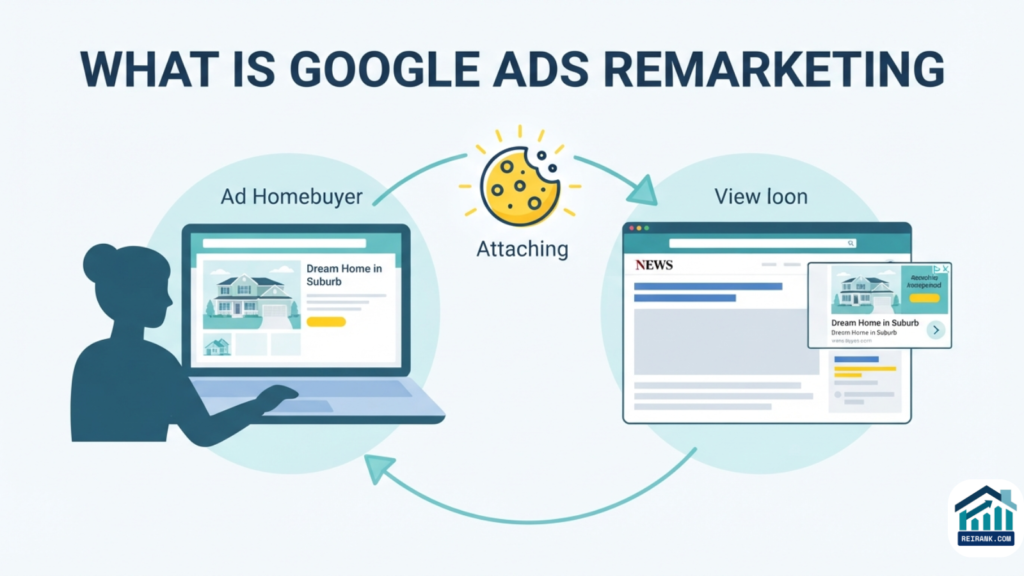
Remarketing, also known as retargeting, is the practice of showing targeted ads to people who have previously visited your website. When a visitor arrives on your investor site, a small piece of code called a remarketing tag or pixel records that visit and adds the visitor to a remarketing audience.
After they leave your site, your ads can follow them across websites in the Google Display Network, on YouTube, and in Gmail, reminding them of your offer and giving them repeated opportunities to return and convert.
The mechanism is not complicated, but the strategic value is significant. A motivated seller who visited your landing page last week but left without submitting their information has already shown a meaningful level of interest in your offer.
They were looking for help, they found your site, and they read at least some of what you have to say. Reaching that person again with a targeted ad is fundamentally different from reaching a cold audience with no prior awareness of your business, and it shows up in the performance data.
Real estate investor retargeting strategy consistently produces lower cost per click, higher click-through rates, and better conversion rates than cold audience campaigns because the audience being targeted has already self-identified as potentially interested in what you offer.
Why Motivated Sellers Often Need Multiple Touchpoints Before Converting
Understanding why remarketing works so effectively for motivated seller campaigns requires understanding the decision process of the homeowner you are trying to reach.
A person dealing with a difficult property situation, whether that is foreclosure, an inherited home, a major repair burden, or financial distress of any kind, is navigating a high-stakes decision with significant emotional weight.
These sellers rarely make their decision on the first website they visit. They search, they find several investor websites, they read, they compare, and they may spend days or weeks in this evaluation phase before reaching out to anyone.
During that window, the investor who stays visible through motivated seller remarketing campaigns has a meaningful advantage over those who are only present in the initial search result and then disappear from the seller’s awareness.
Research on consumer behavior across high-stakes decisions consistently shows that the businesses consumers ultimately choose are the ones they have seen most frequently and most consistently during their research period, not necessarily the ones they found first or who made the most aggressive initial pitch.
Remarketing creates that consistent visibility at a fraction of the cost of acquiring new cold traffic for every impression.
Setting Up Your Remarketing Audience in Google Ads

The technical foundation of any Google Ads remarketing for real estate investors strategy is the remarketing tag and the audience lists built from the data it collects. Setting this up correctly before building any remarketing campaigns is essential because audiences need time to accumulate visitors before they are large enough to serve ads effectively.
Install the Google Ads remarketing tag across your entire investor website, not just on specific pages. This is typically done by adding a small snippet of code to the header section of every page, which can be handled through Google Tag Manager if you are using it for other tracking purposes.
Once the tag is installed and verified as firing correctly, navigate to the Audience Manager in your Google Ads account to create the specific audience lists your remarketing campaigns will target.
For a motivated seller remarketing strategy, the most useful audience segments are all website visitors from the past thirty days, visitors to specific high-intent pages like your main seller landing page or specific situation pages like your foreclosure or inherited property pages.
Visitors who spent a meaningful amount of time on your site, such as more than sixty seconds, indicating genuine engagement with your content.
Excluding visitors who have already converted by submitting a lead form from your remarketing audiences is an important setup step that many investors skip. Showing remarketing ads to people who have already become leads wastes budget and can create a slightly confusing experience for sellers who have already initiated a relationship with your business through their form submission.
Building Your First Motivated Seller Remarketing Campaign
With your audiences defined and accumulating visitors, the next step is building the campaign that will reach those audiences with targeted messaging.
In Google Ads, remarketing campaigns are typically run on the Google Display Network, which places your ads on websites across the internet that are part of Google’s publisher network, reaching your audience as they read news, browse content, check weather, or engage with any of the thousands of sites in the network.
For a real estate investor retargeting strategy, the campaign setup should start with a budget that is meaningfully smaller than your primary search campaign budget.
Remarketing audiences are smaller than cold audiences by definition, since they consist only of past visitors, and a lower budget reflects the lower impression volume available while still maintaining consistent visibility within that audience.
Many investor campaigns run remarketing budgets at roughly ten to fifteen percent of their primary search campaign budget and find that this allocation produces a disproportionately high share of their total lead volume.
Set your frequency cap to control how often an individual visitor sees your ads within a given timeframe. Without a frequency cap, the same person might see your ad dozens of times in a single day, which can feel intrusive and create negative associations with your brand.
A frequency cap of three to five impressions per day per user is a reasonable starting point that maintains visibility without overwhelming the people you are trying to reach.
What Messaging Converts Returning Seller Visitors for Google Ads Remarketing
The messaging in your motivated seller remarketing campaigns should be different from the messaging in your primary search campaigns, because the person seeing your remarketing ad is in a different psychological position than someone encountering your business for the first time.
A cold visitor needs to understand what you do and why it might solve their problem. A remarketing visitor already knows those things.
What they need is a reason to come back and take action rather than continuing to wait or continuing to compare alternatives. The most effective remarketing messaging for motivated sellers uses one of three primary approaches.
The first approach reinforces the specific benefit that is most likely to have resonated with this visitor based on the page they visited. If they spent time on your foreclosure page, a remarketing ad that says “Still Considering Your Options? We Can Close Before Your Auction Date” speaks directly to the concern that brought them to that page in the first place.
If they visited your inherited property page, messaging about how you simplify the process of selling an estate property acknowledges their specific situation.
The second approach addresses the hesitation that likely prevented them from converting on their first visit. For most motivated sellers, this hesitation is some combination of concern about whether the offer will be fair, uncertainty about whether the process is as simple as it sounds, and anxiety about choosing the right buyer in a decision that feels significant.
Remarketing ads that say “No Obligation, No Pressure, Just a Fair Cash Offer” or “See What Other Sellers Say About Working With Us” address these hesitations directly with a low-pressure invitation to re-engage.
The third approach creates gentle urgency by referencing something time-sensitive without using artificial pressure tactics. For a foreclosure audience, referencing timelines is genuinely relevant.
For general motivated seller remarketing campaigns, messaging that references current market conditions or the simple availability of a cash offer in the current environment can create a reason to act now rather than continuing to delay.
Expanding to YouTube Remarketing for Deeper Trust Building
Beyond display advertising, YouTube remarketing is one of the most powerful tools available in a real estate investor retargeting strategy because it allows you to reach past website visitors with video content that builds personal connection and trust in a way that static display ads cannot.
A short video of you explaining your buying process, sharing a seller success story, or simply introducing yourself and your team as real, local, trustworthy people gives returning visitors a much richer sense of who you are than a banner ad ever can.
For motivated sellers who are in a prolonged evaluation phase, seeing your face and hearing your voice repeatedly through YouTube remarketing creates the kind of familiarity that eventually tips the decision in your favor.
YouTube remarketing can be set up through the same Google Ads interface as display remarketing, using the same audience lists. The primary additional requirement is having a video asset of reasonable quality, which does not need to be professionally produced to be effective.
A genuine, well-lit video shot on a modern smartphone, with clear audio and a direct message to the motivated seller viewer, performs well in this context and is accessible to any investor regardless of their production budget.
Measuring Google Ads Remarketing Performance and Optimizing Over Time
Tracking the performance of your motivated seller remarketing campaigns requires looking at different metrics than you would use for primary search campaigns. Since remarketing audiences are smaller and the ads appear in different contexts than search results, the performance benchmarks are different.
Click-through rates on display remarketing tend to be lower than on search ads, which is expected given that the audience is seeing your ad while browsing content rather than actively searching for your services.
What matters more than raw click-through rate is the conversion rate of the traffic that does click through, which should be significantly higher than your cold traffic conversion rate given that these visitors already know your brand.
View-through conversions, which Google tracks when someone sees your remarketing ad without clicking but then converts on your site later through a different path, are an important metric to monitor for understanding the full impact of your remarketing investment.
A motivated seller who sees your remarketing ad on several websites over the course of a week and then returns to your site through a direct search is counted as a view-through conversion, and this data often reveals that remarketing is influencing more conversions than last-click attribution alone would suggest.
How Reirank.com Helps Investors Build and Manage Remarketing Campaigns
Setting up and optimizing Google Ads remarketing for real estate investors requires technical competence in campaign configuration, creative development for display and video assets, audience segmentation strategy, and ongoing performance analysis.
Most investors who manage their own paid search campaigns focus their time and attention on primary search campaigns and either never set up remarketing or set it up once without the strategic structure needed to make it produce meaningful results.
Reirank.com builds comprehensive remarketing strategies as part of complete real estate investor Google Ads management, ensuring that every motivated seller who visits your website and leaves without converting is reached with targeted, relevant messaging that gives them consistent reasons to return and take action.
Our Approach to Remarketing for Real Estate Investors
Our approach includes audience segmentation by seller situation, situation-specific ad creative, YouTube remarketing for deeper trust building, and ongoing optimization based on actual conversion data from your specific market.
Investors we work with have seen their overall Google Ads cost per lead decrease meaningfully after implementing structured remarketing alongside their primary search campaigns, as the incremental leads generated from remarketing audiences are produced at costs significantly below those of cold traffic campaigns.
Frequently Asked Questions About Remarketing for Investors
How long should I remarket to a motivated seller visitor? Most investor remarketing campaigns see the strongest results within the first seven to fourteen days after a visit, when the visitor’s interest is freshest.
Extending remarketing windows to thirty days is reasonable for motivated sellers who may have longer decision timelines, but audiences older than thirty days tend to produce diminishing returns.
What is the minimum audience size needed to run remarketing? Google requires a minimum of one hundred active users in a display remarketing audience before ads can be served. For most investor websites with reasonable traffic, this threshold is reached within a few weeks.
If your website is newer and traffic is low, building your primary traffic first through SEO or search advertising before launching remarketing is the right sequence.
Do remarketing ads feel intrusive to motivated sellers? When frequency is managed appropriately, and the messaging is relevant and respectful rather than aggressive, most motivated sellers experience remarketing as a helpful reminder rather than an intrusion.
The key is maintaining reasonable frequency caps and ensuring your ad messaging serves the seller’s informational needs rather than simply repeating a hard sell.
Can remarketing work alongside my SEO strategy? Remarketing and SEO work extremely well together. Organic search traffic is often the most engaged and highest-intent traffic your website receives, and remarketing to organic visitors who did not convert on their first visit extracts additional value from your SEO investment without requiring any additional spending on your primary SEO activities.
Visit our services page today to explore Reirank.com’s complete real estate investor digital marketing and lead generation services, including Google Ads management, remarketing strategy, SEO, and website conversion optimization.
You can also review testimonials and case studies from investors we have worked with to see the kinds of results that a properly structured remarketing strategy can contribute to alongside a complete digital marketing system.
Your free consultation is the starting point for a remarketing strategy built around your specific market, your existing traffic, and your goals for motivated seller lead generation.
Conclusion: Google Ads Remarketing for Real Estate Investors
Google Ads remarketing for real estate investors is not a complex or expensive addition to a digital marketing strategy. It is a systematic, data-driven approach to capturing the lead value that already exists within your existing website traffic by staying visible to motivated sellers during the extended evaluation period that precedes most high-stakes decisions.
The real estate investor retargeting strategy outlined in this guide, from audience setup and campaign structure through situation-specific messaging and YouTube remarketing, gives you a practical framework for building remarketing campaigns that generate genuine incremental leads from traffic you have already paid for.
Motivated seller remarketing campaigns built around these principles consistently produce lower cost per lead and higher overall lead volume than primary search campaigns alone, making them one of the highest-return optimizations available to any investor running Google Ads.
Visit Reirank.com today to start building a remarketing strategy that keeps your business visible to every motivated seller who visits your site, and turn more of your existing traffic into the closed deals your business is built to produce.