

94% of North Americans searching for properties now start online, which means real estate website performance is not a technical afterthought. It is the primary gateway between a motivated seller and your pipeline.
If your site stalls for even three seconds, that seller closes the tab and calls the next cash buyer on the list. This is why real estate website loading speed wins motivated seller leads.
Key Takeaways
- Speed is the first filter. Motivated sellers judge trust in seconds, before they ever read a word of your copy.
- Real estate website performance drives Map Pack visibility. Slow sites lose ground in the local results that matter most to wholesalers.
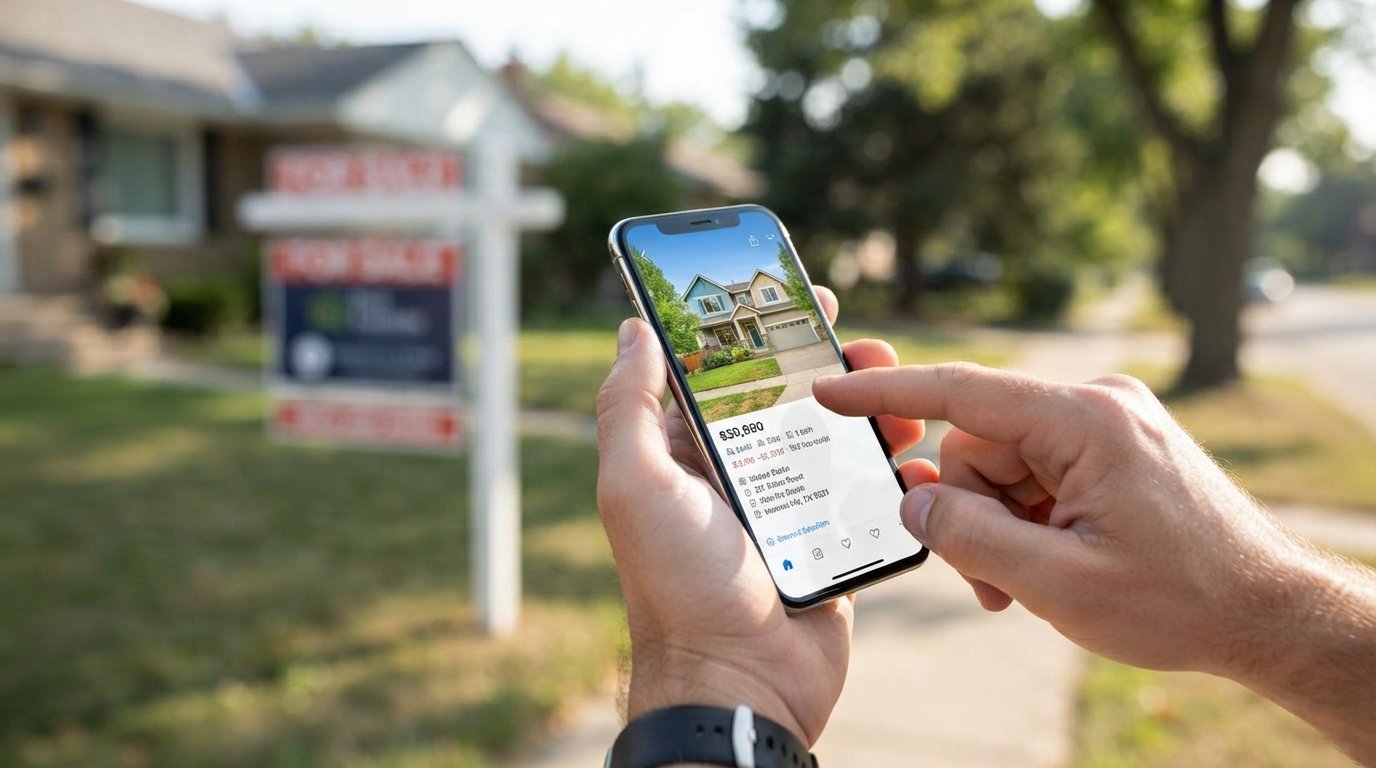
- Mobile matters more than desktop. Most “sell my house fast” searches happen on a phone, often on weak connections.
- Purpose-built beats generic. A website built for real estate investors outperforms a template site every time.
- Performance protects ad spend. A slow landing page burns your Google Ads budget before a lead ever converts.
- Data beats guesswork. Case studies, not opinions, prove what a fast site does to lead volume and cost per lead.
- Performance is ongoing, not a one-time fix. Sites need monitoring the same way local SEO needs monitoring.
What Real Estate Website Performance Actually Means for Wholesalers
Real estate website performance is not just page speed. It is speed, mobile responsiveness, and conversion design working together on one page.
A motivated seller does not care about your technology stack. They care whether the “get my cash offer” button loads before they lose patience.
We build your site around how motivated sellers think, search, and decide who to contact. That means fast-loading forms, fast-loading testimonials, and fast-loading proof that you actually buy houses in their zip code.
Why Slow Real Estate Websites Bleed Motivated Seller Leads
Your marketing budget is likely hemorrhaging cash on leads that will never close, and slow load times are a big reason why. A seller who is behind on payments or facing foreclosure does not have patience for a spinning loading icon.
They have three other cash buyer sites open in other tabs. Whichever one loads first gets the click, and often gets the lead.
This is the reality of “we buy houses” competition in 2026. It is not just about who ranks. It is about who loads.

The Google Map Pack Connection: Speed and Local Dominance
In 2026, 90% of motivated seller clicks never make it past the top three results in the Google Map Pack. Real estate website performance is one of the factors that decides who sits in those three spots.
A slow site does not just frustrate visitors. It signals to the algorithm that your page is a poor match for local intent, and that gets punished with lower visibility.
Our local 3-pack SEO case study for a Phoenix investor shows what happens when speed, reviews, and technical structure align. That client went from 4 reviews to 61 and landed in the map pack for 17 of 20 target keywords.
How We Build Real Estate Investor Websites for Speed and Conversion
Most marketing agencies dabble in real estate; REIRank is built exclusively for wholesalers. That distinction matters most when it comes to site architecture.
Our website development for real estate investors is designed for speed, mobile readiness, and conversion optimization from the first line of code. We are not retrofitting a WordPress theme built for restaurants or law firms.
Every element on the page, from the hero image to the lead capture form, is compressed and optimized so nothing slows down the moment a seller lands on your site.
Multi-City Sites Without the Multi-City Slowdown
Scaling to more markets usually means more pages, more images, and more load. That does not have to mean a slower site.
Our multi-city website case study for an Ohio investor shows a 40-city site built with automated CRM workflows that scaled lead generation without slowing performance or adding manual work.
Real Estate Website Performance and Local SEO Growth
Performance and visibility are not separate problems. They are the same problem viewed from two angles.
Our multi-city local SEO case study for an Atlanta cash buyer ranked 210+ keywords and grew organic traffic 380%, taking five markets from page 4 to the map pack. A fast, well-structured site was the foundation that made that growth possible.
One system, every channel, organic SEO, paid campaigns, and content run as a single coordinated engine. Performance is the connective tissue that holds that engine together.
Mobile Real Estate Website Performance Is Non-Negotiable
Most “sell my house fast” searches happen on a phone. Often on a weak signal, in a car, or on a lunch break.
A site that loads fine on a fiber connection at your office can crawl on a seller’s four-year-old phone with three bars of service. Mobile-first testing is not optional in 2026.
60% of viewers spend their time checking images rather than reading descriptions, which means a mobile gallery that hangs or stutters kills the entire experience before your value proposition ever gets read.
Site Speed and Paid Campaigns: Why Google Ads Depends on Performance
Every channel REIRank manages is tuned to attract motivated sellers with equity, not casual browsers. But even the best-targeted ad dollar gets wasted if the landing page it points to loads slowly.
Our Google Ads case study for a Colorado cash buyer shows a client scaling from one city to three in 90 days without raising cost per lead. Landing page performance was part of what kept that cost stable.
In a separate smart bidding case study for a Chicago-area investor, cost per lead dropped 42% in 90 days. Smart bidding algorithms reward pages that convert fast, and conversion speed starts with load speed.
Even social campaigns depend on it. Our Facebook Ads case study for a Florida cash buyer cut cost per lead from $2,847 to $61, turning a stalled campaign into a motivated seller machine once the funnel behind the ad was fixed.
Percentage of real estate website visitors who react negatively to poor loading performance.
The Cost of Ignoring Real Estate Website Performance
Data-driven decisions, not guesswork, are how we approach every client engagement. The data on performance is not subtle.
Single-property pages that load fast see up to 55% more traffic. Listings with floor plans see a 52% increase in click-through rate, but only when those interactive elements render instantly instead of freezing the page.
360° tours make a visitor 95% more likely to inquire, and virtual tours generally drive 87% more views. None of that matters if the tour buffers for ten seconds before it plays.
Real estate investor websites have one job: turn motivated seller attention into trust. A slow site breaks that job before it starts.
Full-Funnel Real Estate Website Performance: What Our Case Studies Prove
Our $57 leads to a 7.5X return case study is a direct result of full-funnel discipline, where SEO, PPC, and site performance all pull in the same direction.
REIRank owns that real estate so your competitors cannot. That ownership starts with a technical foundation competitors are not built to match.
How to Audit Your Own Real Estate Website Performance
You do not need to be a developer to spot problems. Load your homepage on a phone with mobile data, not WiFi, and time it.
Anything past three seconds is losing you leads. Check your lead capture form on mobile specifically, since forms are often the last element to load and the first thing a seller abandons.
- Test load time on mobile data, not just office WiFi
- Compress every property photo before upload
- Confirm your lead form loads before, not after, the hero image
- Check your Map Pack listing load speed on a real phone
- Review your social campaign landing pages for the same speed standard as your main site
Conclusion: real estate website loading speed
Real estate website performance decides who gets the call and who gets ignored. It is not a technical detail buried under design and copy. It is the first impression, the trust signal, and the gatekeeper for every motivated seller lead you are paying to attract.
Dominate your local market and keep your pipeline full by fixing the foundation first. Talk to us about your site, or review our approach to real estate marketing before you spend another dollar on traffic your slow site cannot convert.
Frequently Asked Questions
What is considered good real estate website performance in 2026?
A well-optimized real estate investor site should load in under three seconds on both mobile and desktop. Anything slower measurably increases the chance a motivated seller leaves before filling out a form.
Does site speed actually affect motivated seller lead volume?
Yes. Slow real estate website performance directly reduces form completions, increases bounce rates, and lowers visibility in the Google Map Pack where most local seller searches end up.
Is it worth paying for a custom-built investor website instead of a template?
For wholesalers competing on speed and local visibility, a purpose-built site almost always outperforms a generic template in 2026. Templates are rarely optimized for the mobile-heavy, form-driven behavior of motivated sellers.
How does real estate website performance affect Google Ads results?
A slow landing page raises cost per lead even when targeting and ad copy are strong. Our Colorado and Chicago case studies both show cost per lead dropping when performance and bidding strategy were addressed together.
Can I improve my site’s performance without a full rebuild?
Some gains come from compressing images and cleaning up unnecessary code, but most older investor sites hit a ceiling. At that point, a rebuild focused on real estate website performance from the ground up delivers a bigger, more lasting return.
How often should I check my real estate website’s loading speed?
Check it monthly, and always after adding new pages, images, or city-specific landing pages. Multi-city sites are especially prone to slowing down as they scale, which is why performance testing needs to be ongoing, not a one-time fix.
Does mobile performance matter more than desktop for motivated sellers?
Yes, most “sell my house fast” searches happen on mobile devices, often on weaker connections than a home WiFi setup. Prioritizing mobile real estate website performance protects the largest share of your incoming lead traffic.