

When a motivated seller searches “sell my house fast,” “cash home buyers near me,” or “we buy houses in [city],” Google often shows the Map Pack before the traditional organic results.
Three businesses. A map. Reviews. Phone numbers. Directions. Website links. If your cash home-buying business is not there, your competitors are capturing the calls.
Proven Local SEO for Real Estate Investors gives you a direct path to stronger visibility, more qualified seller inquiries, and lower dependence on paid advertising. But generic optimization is not enough. You need a local search system built specifically for real estate investors, wholesalers, and cash home buyers.
This is the 2027 Map Pack playbook.
More Local Visibility. More Qualified Seller Calls.
Local SEO helps your business appear when property owners search for a solution in your market. These searches carry strong intent because the seller is already looking for help.
You are not trying to attract casual browsers. You are trying to reach homeowners who want to:
- Sell an inherited house
- Avoid foreclosure
- Sell a rental property with tenants
- Move quickly after a divorce
- Sell a damaged or outdated property
- Avoid repairs, showings, and agent commissions
- Receive a cash offer for an unwanted house
Your goal is simple: show up first, build trust quickly, and make it easy for the seller to call or submit a form.
Google says local rankings are primarily influenced by relevance, distance, and prominence. Your strategy needs to strengthen all three.
1. Build a Complete Google Business Profile
Your Google Business Profile is the foundation of Map Pack visibility.
An incomplete profile gives Google less information about your company. It also gives sellers fewer reasons to trust you. Complete every relevant field with accurate, consistent information.
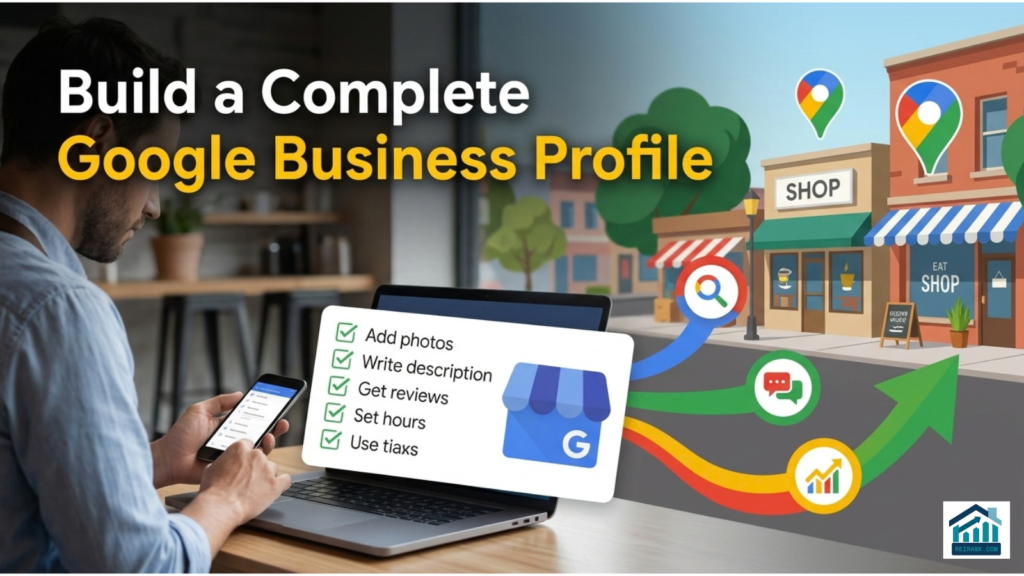
Focus on:
- Real business name
- Accurate primary category
- Relevant secondary categories
- Local phone number
- Website URL
- Business hours
- Service areas
- Business description
- Services and products
- Property and team photos
- Seller-focused questions and answers
- Weekly Google Business Profile posts
Use your actual business name. Do not add keyword phrases or locations unless they are part of your real-world brand name. A name such as “Best Cash Home Buyer Dallas” can create compliance problems if that is not your legal or public business name.
Your description should explain who you help, what properties you buy, where you operate, and how your process works. Use phrases sellers understand:
- “Sell your house fast”
- “Cash home buyers”
- “Buy houses as-is”
- “Inherited property solutions”
- “Tenant-occupied properties”
- “Foreclosure options”
Keep the language natural. Relevance matters, but keyword stuffing does not build trust.
If you operate as a service-area business, follow Google’s rules carefully. Use a real physical address for verification, hide the address if sellers do not visit your location, and list only the cities or ZIP codes you genuinely serve. Do not use a PO box or virtual office as a substitute for a real business location.
Review Google’s official local ranking guidance before making major changes.
2. Choose One Primary Market Before Expanding
Trying to rank everywhere at once creates a disconnected local SEO campaign.
Start with one primary market. Build authority there. Generate reviews there. Create useful local content there. Then expand into additional cities with a proven structure.
Target searches such as:
- “Sell my house fast [city].”
- “We buy houses [city].”
- “Cash home buyers [city]”
- “Sell inherited house [city].”
- “Cash buyer for rental property [city]”
- “Avoid foreclosure [city].”
Organize these keywords by seller intent. A homeowner searching for a cash buyer has a different need from a landlord searching for help with a tenant-occupied property.
Your GBP services, website pages, blog content, and review strategy should all support the same local search intent.
One market. One clear message. More momentum.
3. Create City-Specific Cash Buyer Pages
Your homepage cannot rank equally well for every city, neighborhood, and seller situation.
Create dedicated landing pages for the locations you actively serve. Each page should provide useful, original information instead of repeating the same template with a different city name.

A strong city page includes:
- A clear headline using the city naturally
- A direct “sell your house fast” offer
- Local neighborhoods and ZIP codes
- Common seller situations in that market
- Your as-is buying process
- Expected communication and timeline
- Local seller testimonials
- Simple call and form CTAs
- Frequently asked questions
- Internal links to related services and resources
For example, your page could target “Sell Your House Fast in Phoenix” or “Cash Home Buyers in Indianapolis.”
Add details that demonstrate real local knowledge. Mention neighborhoods you buy in. Discuss local property conditions. Explain why sellers in that market choose a cash solution.
Do not publish dozens of thin pages with identical copy. Google rewards useful local relevance, not mass-produced location pages.
See the REI Rank local SEO playbook for “we buy houses” rankings for a deeper city-page strategy.
4. Turn Reviews Into a Weekly Growth System
Reviews are one of your strongest trust and visibility assets.
A seller comparing three cash buyers will notice:
- Review count
- Average rating
- Review recency
- Review quality
- Business responses
- Seller experiences
- Mentions of location and service
Do not ask for reviews once and forget about them. Create a repeatable system.
Request a review from every eligible seller after a successful closing. Send the request by text or email while the experience is still fresh. Make the process simple. Give the seller a direct link to your Google review form.
You can invite sellers to discuss the parts of the experience that mattered to them, such as:
- Communication
- Speed
- Professionalism
- Fair treatment
- Selling the property as-is
- Avoiding repairs or showings
Never pressure sellers to leave positive reviews or offer incentives that violate platform policies.
Respond to every review. Thank satisfied sellers. Address negative feedback professionally and move the conversation offline when appropriate.
Then feature authentic reviews on your city pages and conversion-focused landing pages. Local SEO gets the click. Social proof helps win the call.
5. Fix Your Citations and NAP Information
Citations are online mentions of your business name, address, and phone number. They help Google confirm that your company is legitimate and consistently represented across the web.
Your core business information should match across:
- Google Business Profile
- Website
- Yelp
- Apple Business Connect
- Bing Places
- Better Business Bureau
- Local Chamber of Commerce
- Real estate directories
- Investor associations
- Relevant BiggerPockets profiles
NAP means name, address, and phone number. Keep all three consistent.
Even small differences can create confusion. Avoid changing your business name format, switching between phone numbers, or using multiple addresses without a clear reason.
Run a citation audit. Correct outdated listings. Remove duplicates where possible. Then build new citations on trusted, relevant platforms.
More citations are not always better. Clean, accurate, relevant citations outperform a large collection of weak listings.
6. Publish Local Content Sellers Actually Need
Your content should answer the questions that keep motivated sellers searching.
Build content around:
- How to sell a house with code violations
- What happens when you inherit a property
- How to sell a rental with tenants
- Options before foreclosure
- Selling a house that needs major repairs
- Cash offers versus traditional listings
- How long a cash home sale takes
- What closing costs sellers should expect
- How to sell a vacant or unwanted property
Add local context whenever possible. A national article is useful, but a guide for homeowners in your specific city can earn stronger local relevance.
Keep answers direct. Explain the process in plain language. Add internal links to your city pages and contact forms.
This supports both traditional SEO and answer-focused search experiences. When sellers ask Google a question, your content should provide the clearest answer.
7. Track Map Pack Performance Correctly
Do not judge local SEO by searching your own business once from your office.
Map Pack results can change based on:
- Searcher location
- Device
- Search wording
- Competition
- Business category
- Review signals
- Local relevance
- Search history
Track your rankings from multiple locations in your target market. Monitor searches such as:
- “Cash home buyer near me”
- “Sell my house fast [city].”
- “We buy houses [city].”
- “Real estate investor [city]”
Measure business outcomes, not just rankings:
- Calls
- Form submissions
- Qualified seller conversations
- Appointments
- Offers made
- Contracts signed
- Closed deals
- Cost per qualified lead
- Lead source
A ranking is useful only when it creates commercial momentum.
Your 30-Day Map Pack Action Plan
Week 1: Build the Foundation
- Claim and verify your Google Business Profile
- Confirm your real business name and category
- Correct your service area
- Add complete contact information
- Upload local team and property photos
- Write a seller-focused business description
Week 2: Strengthen Local Relevance
- Choose your primary market
- Build one high-quality city page
- Add relevant services to your profile
- Publish your first local seller FAQ
- Connect your GBP to your website
Week 3: Build Trust
- Audit your citations
- Correct inconsistent NAP information
- Request reviews from recent eligible sellers
- Respond to every existing review
- Add testimonials to your city page
Week 4: Improve and Measure
- Publish a local market or seller resource article
- Post weekly on your Google Business Profile
- Test Map Pack visibility from multiple locations
- Track calls and form submissions
- Identify the next city or neighborhood to target
Own Local Search Before Your Competitors Do
Local SEO is not a generic marketing task. It is a motivated-seller acquisition system.
Your Google Business Profile creates visibility. Your city pages create relevance. Your reviews create trust. Your citations create consistency. Your tracking shows which efforts generate qualified leads and closed deals.
That is the difference between disconnected activity and coordinated growth.
REI Rank builds local SEO campaigns exclusively for real estate wholesalers and cash home buyers. We optimize your Google Business Profile, create market-specific content, strengthen your local authority, track performance, and connect SEO to the seller leads your team actually wants.
You can book a free consultation to review your current local visibility, identify missed opportunities, and confirm whether our purpose-built approach fits your business.
More qualified seller leads. Less wasted budget. Stronger Map Pack visibility.
Do not get left behind.
Frequently Asked Questions on Proven Local SEO for Real Estate Investors
How long does local SEO take for a real estate investor?
Some Google Business Profile improvements can create movement quickly. Stronger organic rankings and consistent Map Pack visibility usually require ongoing work across reviews, citations, local content, and website authority. Start with one market and build momentum every month.
Check out case studies with recent clients here
Can a cash home buyer use a Google Business Profile?
Yes. A legitimate cash home-buying business that interacts with customers can qualify. Your profile must represent your real business accurately and follow Google’s guidelines for business names, locations, categories, and service areas.
Should I create a separate Google Business Profile for every city?
Usually, no. A service-area business should generally maintain one profile for its main business. Do not create multiple profiles for cities where you do not have eligible, staffed, customer-facing locations.
What is more important: reviews or city pages?
You need both. City pages strengthen local relevance and conversions. Reviews strengthen prominence and trust. The strongest campaigns coordinate both instead of choosing between them.
Can REI Rank manage local SEO and Google Ads together?
Yes. REI Rank combines local SEO, Google Ads, conversion-focused landing pages, tracking, and reporting into one coordinated system. You get faster paid visibility while your organic local presence compounds over time.